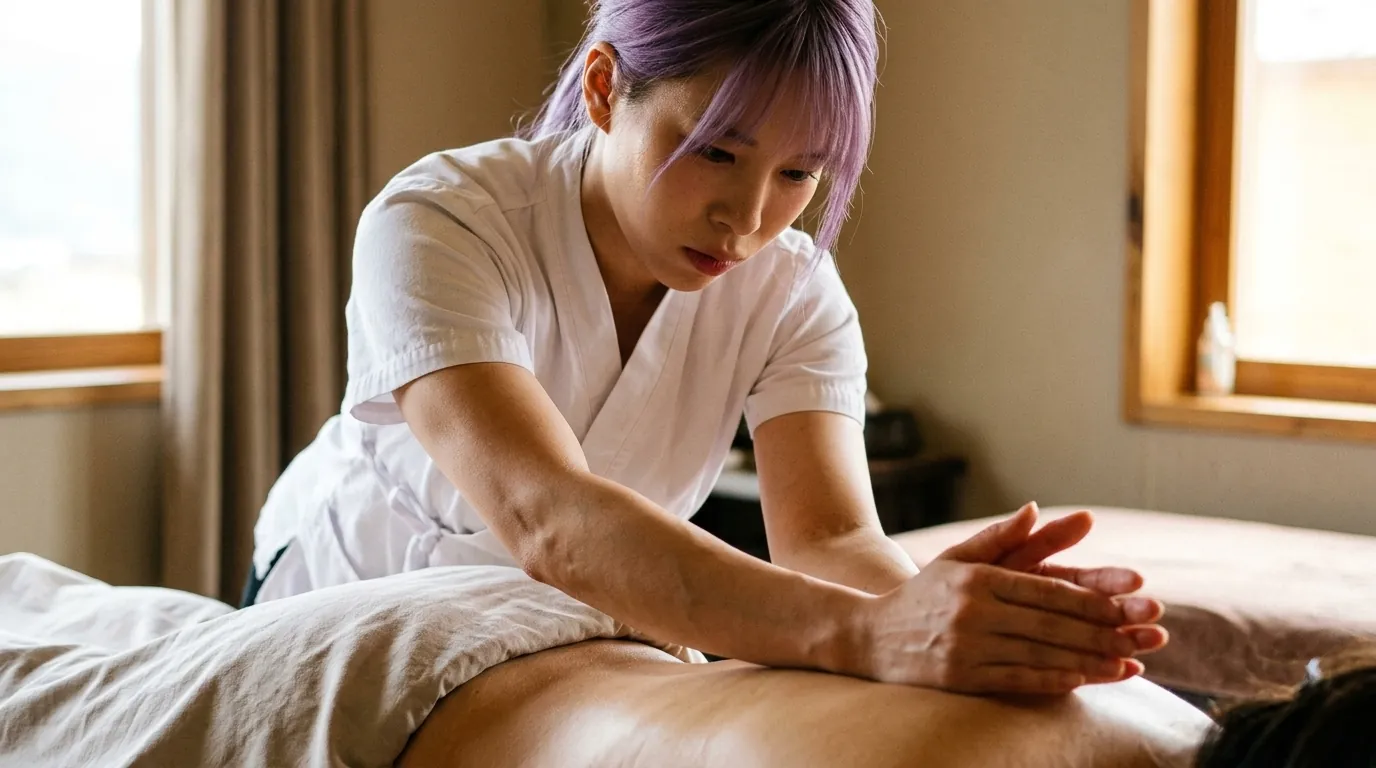
Giving someone their first massage is a slightly odd gift. You are not handing over an object they can put on a shelf and think about later. You are handing over an hour in which they will be asked to lie still, mostly undressed, in a room they have never seen, with a person they have never met. Most people who have never had a massage are curious about it. A good number are also quietly nervous. The gift works or fails on how you handle that second part.
A first massage works best as a gift when it is the gentler treatment at the shorter length: a straightforward oil-based session on a table, with nothing asked of the person but to lie there. Give it with no deadline attached, say that the treatment can be changed when they book, and make it clear that nobody minds if they never go.
Why a first massage is a different gift from a second one
Somebody who already goes knows what they are buying. They have a treatment they like, a pressure they ask for, and a sense of what an hour will do to their afternoon. For them the gift is simply a good one.
For a first-timer, the same gift arrives with questions stuck to it. What do I take off. What happens to my face. What if I hate it halfway through. What if I say the wrong thing. They will not ask you any of this, because asking would sound ungrateful, so the questions stay where they are and the voucher goes in a drawer.
Which means the useful work is not finding the most impressive treatment on the menu. It is removing as many of those unknowns as you can before the person has to decide anything.
Which massage is best for a beginner?
Default to the plain oil massage. Swedish massage is the familiar shape: warm oil, long even strokes, lying on a table under a towel. It has the shortest list of surprises in it, and it asks nothing of the guest except that they stay where they are.
There is one common exception. Somebody who is restless rather than shy, who plays sport or fidgets through films and finds an hour of stillness harder than an hour of being handled, often gets on better with Thai Combination Massage. The first half is done through loose clothing with assisted stretching, which keeps the body involved, and the oil work comes afterwards. It suits the curious. It is not the one for the anxious.
What to avoid as a gift is anything firm. Pressure is a preference people form by having a massage, not before one, and a beginner given a deep treatment has no way of knowing whether what they are feeling is too much or simply unfamiliar. That is a decision to leave with them for a second visit, and the guide to choosing pressure is the thing to send them when they get there.
| What you know about them | What to give |
|---|---|
| Curious, but uneasy about being touched by a stranger | The gentler oil treatment, at the shorter length |
| Restless, sporty, hates sitting still | The stretch-based combination treatment |
| Has repeated somebody else's advice about needing something firm | Still the gentler option, with a line saying they can change it |
| Nervous specifically about undressing in front of a stranger | The stretch-based treatment, where the first half is done in loose clothing |
How long should a first massage be?
Shorter. Where a treatment comes in two lengths, the briefer one is almost always the better gift for a first visit. Lying still is a skill people build, and an unfamiliar room stops feeling unfamiliar somewhere in the middle rather than at the start.
Ending a first session while it still feels good is a far better outcome than spending the last stretch of a long one wondering how much is left. If they like it, the next booking is the longer one, and they will make that choice themselves. The difference between a shorter and a longer session is worth reading once they have a first visit behind them.
What should you say when you hand it over?
Any spa gift lands badly if the wording turns it into an observation about the person, which is the part covered in how to give a massage as a gift. A first-timer has a second problem sitting on top of that one. They are being handed something they do not yet know how to do, and a gift you do not know how to use quietly turns into homework.
- Attach no date, no season and no deadline. A nervous person may need three months before they feel like going, and that is fine.
- Say once that the treatment can be changed when they book, then leave the subject alone.
- Keep the description short. A detailed account of what happens in the room makes an hour sound like a procedure.
- Do not promise them how it will feel. Telling someone they are going to love it hands them something to fail at.
One sentence usually covers all four. Something close to: this is an hour that belongs to you, use it whenever you like, and swap it for whatever you fancy on the day.
Give them a way out
A nervous person accepts a gift more easily when they can see the exit from it. Say the exit out loud, once, at the moment you hand it over, and then never mention it again.
What should you tell them before they go?
Not much, and only if they ask. Over-briefing a nervous person makes the visit sound more complicated than it is. Two links cover nearly everything a first-timer wonders about: what the hour actually consists of, and the clothing question that quietly bothers most people.
- The shape of the visit, start to finish, is set out in what happens at a first massage.
- The undressing question is answered plainly in what to wear.
- Everything else is handled in the room. The practitioner asks what they want before anything begins, and they can change their answer mid-session.
It is also worth saying that nothing is expected of them socially. They do not have to talk, do not have to seem blissful afterwards, and do not have to report back to you. Being asked how it was is the last small obligation in a gift that was meant to have none.
When a massage is not the right first gift
There are people for whom the timing is wrong rather than the idea. Someone recovering from surgery or an injury, someone managing a medical condition, or someone who is pregnant should speak to their doctor before booking anything. A practitioner is not giving medical advice and is not the person to decide whether a treatment suits a condition.
None of that rules the gift out. It just means the honest version of it is open-ended: here is a massage, for whenever you and your doctor are happy with the idea. Said at the point of giving, that lands as consideration. Discovered later at the door, it lands as an awkward afternoon.
Beyond that, the calculation is simple enough. Gentle over firm, shorter over longer, no deadline, and a sentence that puts the hour in their hands rather than yours. If you want to see what you are choosing between first, the full collection of treatments is worth a slow read before you decide.
Common questions
What is the best massage for a beginner?
The gentler oil-based treatment, almost always. It has the fewest unfamiliar parts to it and asks nothing of the person except that they lie down. A stretch-based session is a reasonable alternative for someone who is restless rather than nervous, because it keeps the body involved.
They have said they do not like being touched by strangers. Should I still give it?
If they have said it plainly, treat it as a no rather than a hurdle to get them over. If it is hesitation rather than objection, the gentler oil treatment at the shorter length is the version with the least in it, and every choice inside the session stays theirs. Say they can hold on to it unused for as long as they like, and mean it.
Is it rude to give someone a massage as a gift?
It is only rude if it reads as a comment on how they look or how they are coping. The wording does that, not the gift. Say you wanted them to have an hour to themselves, and leave anything about stress, tension or needing it out of the sentence.
What if they never use it?
Then they never use it, and that is allowed. Some people need to carry the idea around for a while before they act on it, and a gift with a deadline attached stops being restful. If it matters to you that the hour happens, offer once, months later, to sort the booking out for them.
Can I book the appointment for them?
You can, and for a nervous first-timer it removes the step they are most likely to stall on. Check the date with them first rather than surprising them with it, because an appointment they did not agree to becomes an obligation in the diary. Ask them beforehand whether there is anything the practitioner should know.