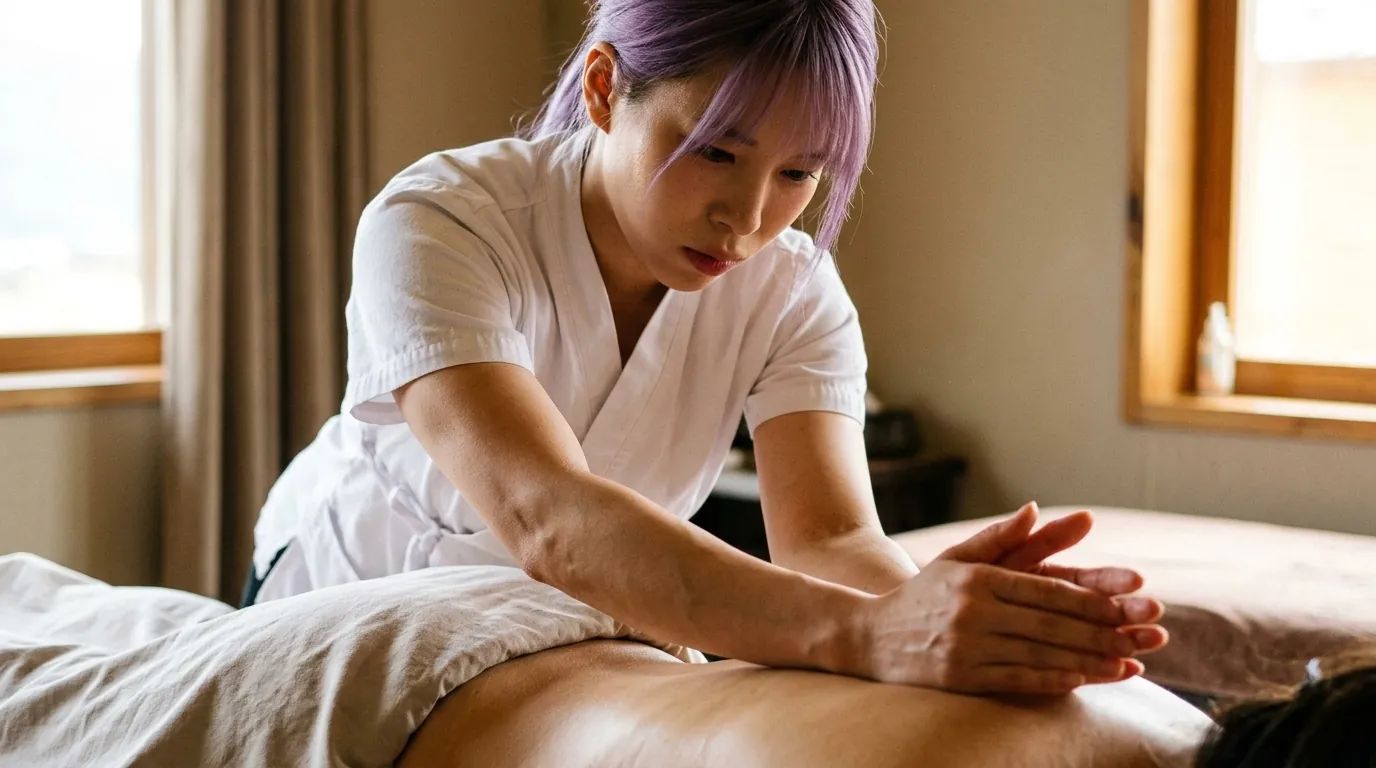
A treatment menu hands you two numbers and leaves you to pick between them. The useful way to think about it is as a budget. A session holds a fixed amount of hands-on time, and everything you would like covered has to fit inside it.
A sixty minute massage covers one unhurried pass over the whole body, or thorough work on two or three areas, but rarely both. Ninety minutes removes the trade-off: full coverage plus focused attention where you want it, at a pace nobody is rationing. Book sixty minutes for a regular pause or a single problem area, ninety when you want depth and coverage together.
What actually fits inside sixty minutes?
A session does not start the moment you walk in. There is arriving, a short conversation about what you want and what to avoid, getting comfortable on the table or the mat, and a few quiet minutes at the end before you feel ready to stand up. None of that is wasted. None of it is hands-on either.
What is left is the working time, and at an unhurried pace that comes to roughly one pass over the body. Back and shoulders, arms, legs, neck, with the practitioner moving on before any one area has taken the whole hour. The alternative is to spend it on two or three areas properly and leave the rest. What it does not stretch to is both.
That is the thing worth knowing before you book. Sixty minutes asks you to choose between coverage and depth. Ninety minutes mostly takes the choice away.
What does the extra thirty minutes buy?
Not simply more of the same. The shape of the session changes.
- Coverage and depth in one visit, rather than one at the expense of the other.
- A slower opening. The first stretch of a massage is partly about arriving, and there is room for that to take as long as it takes.
- The parts that usually get skipped: hands, feet, scalp, the front of the shoulders, the places a shorter session passes over to stay on schedule.
- Room to change course. If something turns out to be holding more than expected, there is time to stay with it without borrowing from everything after.
- Less clock in the room, which is harder to describe and often the part people notice most.
That last one matters more than it sounds. When time is tight, a practitioner is quietly budgeting throughout, and some of that reaches you. When it is not tight, the session simply unfolds.
Which length suits each treatment?
Duration lands differently depending on what the treatment is doing with it. Every massage on the menu is offered in both a shorter and a longer session, so this is a question of fit rather than availability.
| Treatment | At sixty minutes | At ninety minutes |
|---|---|---|
| Swedish massage | A comfortable full-body pass at a gentle pace. The most natural fit for an hour. | Genuinely unhurried. Long strokes repeated until you stop counting them. |
| Deep tissue massage | Best spent on one or two areas. Firm work is slow work, and slow work eats time. | Focused attention where you asked for it, with enough general work that the rest of you is not left out. |
| Thai Combination massage | Brisk. The stretch sequences and the oil work are both asking for the same hour. | Where this treatment makes the most sense. Stretching, pressure and oil each get a proper share. |
| Couple massage | Workable, though two people settling in and finishing takes longer than one. | The easier choice. A shared visit has more edges to it, and the extra time absorbs them. |
| 4 Hands massage | Covers more ground than an hour usually does, because two practitioners are working at once. | Generous. The coordinated rhythm has time to stop being novel and become the whole experience. |
The two-practitioner treatments are the interesting case, because four hands cover in an hour roughly what two hands cover in longer. If you are weighing those two against each other for other reasons, the difference between a couple massage and a 4 hands massage is a separate question worth reading first.
When is sixty minutes the better choice?
Longer is not automatically better, and there are several situations where the shorter session is the right booking rather than the compromise.
If you come regularly, an hour is usually the sensible rhythm, because the point is the returning rather than the single visit. That is a different question from this one, and how often to come back deserves its own answer.
If you only have a certain window in the day, book the length that fits it. An hour you can arrive to calmly beats ninety minutes spent half-aware of what comes next. And if you are new to firm pressure, an hour of it is plenty to learn from. The guide to massage pressure covers how to judge what you actually want.
Is a ninety minute massage worth it?
Worth it is really a question about what you want the visit to do. If you are coming because one area has been complaining and you would like it seen to, an hour does that job and you will not feel short-changed. If you are coming because the whole week has accumulated somewhere in your shoulders and your jaw and your lower back, an hour will feel like a good start that ended early.
There is also something worth knowing about the second half of a long session. The first stretch tends to be spent arriving: noticing the room, adjusting to being touched, running through whatever you were doing an hour ago. The point where you stop tracking the massage and simply receive it tends to arrive late. A longer booking puts that point in the middle rather than near the end.
How do you decide on the day?
- Name the reason you are comingOne stubborn shoulder is a different booking from a week that has left you wound up all over. Say the reason out loud to yourself before you look at the menu.
- Count the areasOne or two areas fit comfortably into an hour. Once you are listing three or more and still adding, you are describing a longer session.
- Check how you will arrive and leaveIf either end of the appointment is pressed against something else in your day, take the shorter session and keep the calm you came for.
- Say the plan at the startYour practitioner divides the time according to what you tell them, so the first two minutes shape the rest. Saying what you want is easier than it sounds, and it matters more in a shorter booking.
Neither choice is a commitment. Book the hour, notice whether it ended at the right moment or ten minutes too soon, and let that decide next time. When you are ready, you can choose a treatment and a length and take it from there.
Book the time you can actually give. An unhurried hour beats a longer session you spend watching the clock.
Common questions
Is an hour massage enough?
For most regular visits, yes. An hour is enough to work over the whole body once at a comfortable pace, or to give real attention to a couple of areas. It stops being enough when you arrive with a long list and expect all of it covered properly.
Does the ninety minute session include the conversation and getting changed?
Ask when you book, because spas quote it differently: some mean hands-on time and some mean the time the room is yours. If yours quotes room time, arriving a few minutes early protects the hands-on part instead of eating into it. If you do run late, say so as you arrive, so your practitioner can plan a shorter session properly rather than rushing the usual one.
Can I book ninety minutes and only have my back worked on?
You can, and some people do exactly that. Say so at the start so your practitioner plans the time around it rather than working over the whole body and returning to your back at the end. Be aware that sustained work in one area can feel like a lot, so speak up if you would rather they move on.
Which is better value, two sixty minute sessions or one ninety?
They answer different questions. Two shorter visits give you the pause twice, which suits ongoing everyday tension. One longer visit gives you depth in a single sitting, which suits a week that has piled up. Neither is the thrifty choice in disguise.
If I have never had a massage before, which should I book?
Sixty minutes is the easier first booking. You learn how you respond to being worked on, how you feel about the pressure and how you like to spend the quiet. Ninety minutes is a long time to discover that you would have preferred something gentler.