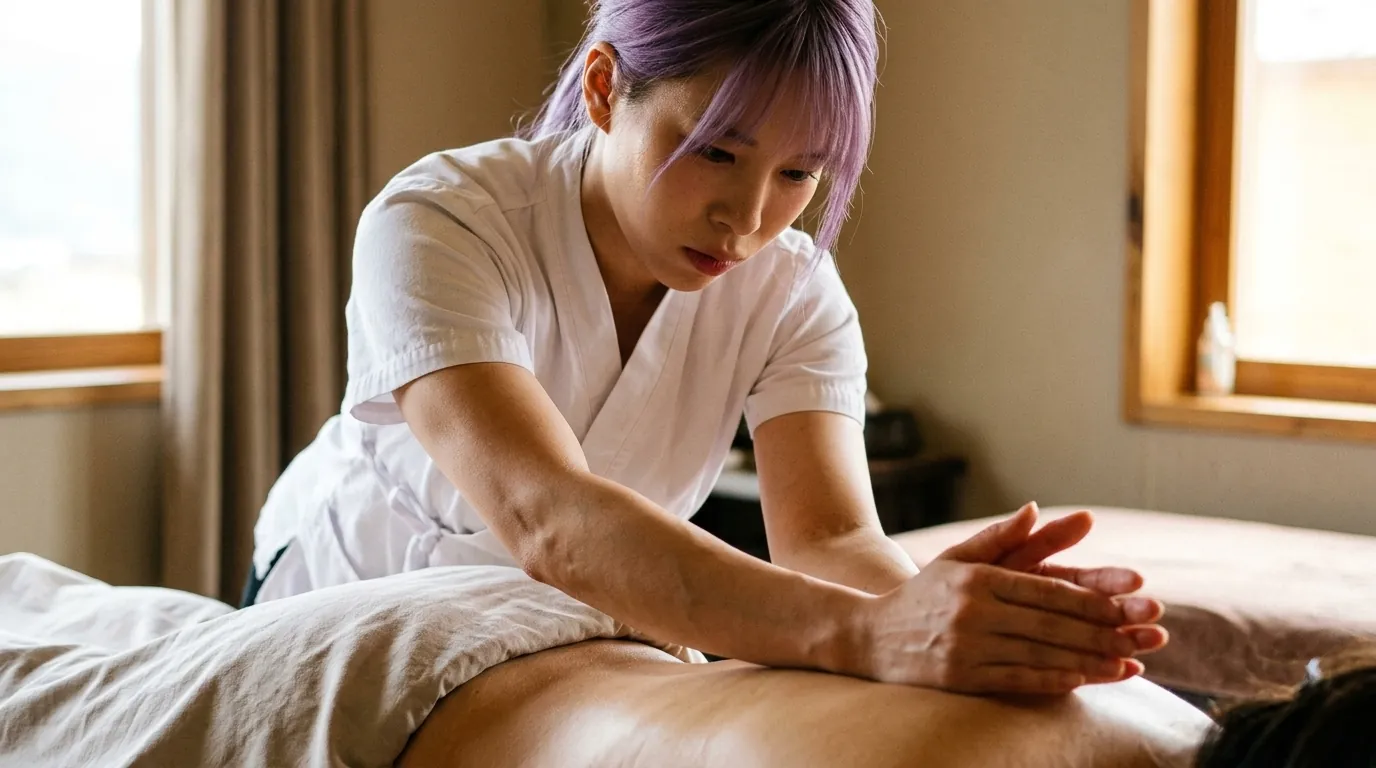
There is a particular kind of booking people keep putting off. Not because they do not want it, and not because the money is the obstacle. They put it off because nothing has happened yet that seems to justify it. No birthday, no anniversary, no finished project. Just a Tuesday, and a body that has been carrying a fortnight around.
You do not need an occasion to book a massage. Occasions work like permission slips, and waiting for one means the hour only arrives when something else has earned it for you. Booking for yourself works the way any other appointment works: you decide the hour is worth having, you put it in the diary, and you go.
Why do we wait for a reason?
Most of us keep two separate accounts in our heads. One is for necessities, where a dentist appointment or a replacement pair of work shoes goes through without argument. The other is for treats, and everything in that account needs a signature before it clears. A birthday is a signature. So is a promotion, a hard year, or somebody else deciding to buy it for you.
Massage almost always gets filed in the second account. It is why, for a lot of people, the only massage they have had is one somebody else bought them. The treatment was never the difficult part. The filing was.
What waiting for an occasion actually costs
If the hour only arrives when an occasion arrives, it arrives roughly once a year, and rarely at the moment it would have been most welcome. It lands in the middle of a celebration week, when you had already slowed down, rather than in the fortnight when your shoulders crept up towards your ears and stayed there.
The second cost is easier to miss. When something happens once a year you never learn anything from it. You do not find out which pressure suits you, whether you prefer quiet or conversation, or which treatment you would happily choose again. Every visit stays a first visit. People who book for themselves, even a few times a year, stop guessing, and how often to come back turns into a question with your own answer rather than a general one.
Is it selfish to book a massage for yourself?
This comes up often, usually phrased as a joke so it can be asked safely. The plain answer is that the word does not fit. Selfishness means taking something at somebody else's expense. An hour scheduled in advance, paid for out of your own money, with the household told when you will be out, takes nothing from anyone. Nobody is waiting on you. Nothing is being neglected.
What people usually mean is that it feels indulgent to spend money on comfort and have nothing to show for it afterwards. That is a fair thing to feel and a poor thing to obey. You are allowed to buy an hour of being looked after for no reason beyond wanting one.
How is booking your own different from receiving one?
Every decision in gifting runs on guesswork. Somebody choosing a treatment as a gift has to guess your pressure tolerance, your comfort with being undressed, your feelings about talking, and whether you would rather be stretched or left still. When the buyer and the guest are the same person, all of that guessing disappears at once.
| The decision | Someone buying it for you | Booking it yourself |
|---|---|---|
| Treatment | Picked from what sounds pleasant, or left open on a voucher | Picked for what your body has been doing this month |
| Pressure | Guessed, or sidestepped by choosing something gentle | Stated plainly before the session starts |
| Timing | Whenever the voucher finally gets used, often months late | The week you actually want it |
| Length | Usually the shorter option, to be safe | Whichever length the visit needs |
None of that is an argument against gifts. It is simply why a booking you make yourself tends to fit better, and why it is worth making one even with a voucher sitting in a drawer.
Choosing when nobody else is in the room
With no second guest to consider and no giver to please, one question is left: what do you want the hour to do. Three answers cover most of it.
- You want to stop thinking. Swedish massage is long, flowing and gentle to medium in pressure, and asks nothing of you except lying still.
- One particular place has been complaining all week. Deep tissue massage is slower and firmer, and gives one or two areas real attention rather than covering everything lightly.
- You want the hour to feel unmistakably like an event. A 4 hands massage puts two practitioners on one guest, working in a single coordinated rhythm.
If you are genuinely unsure how firm you like it, read the pressure guide before you book and then say your preference out loud when you arrive, rather than deciding to be polite about it once you are on the table.
The most self-directed hour on the menu
Of the five treatments, the four hands massage leaves the least room for anybody else's preferences. A couple massage involves a second person's comfort. A gift carries a giver's idea of you. Four hands has one guest, and the whole design of it aims at that guest losing track of where the next stroke is coming from. There is nobody to check on and nothing to coordinate around.
Putting the hour in the diary
- Pick the week, not the moodDo not wait until you feel wound up enough to deserve it. Look ahead for a week that is already full and put the session near the end of it.
- Give it appointment statusAn hour that can be moved for any reason will be moved. Tell whoever needs to know, the same way you would for anything else in the calendar.
- Decide the length in advanceWhere there are two lengths to choose from, they do different jobs. The shorter one resets you. The longer one leaves room for coverage and focused work in the same visit. Choose before you arrive rather than at the desk.
- Open with two sentencesPressure, any area to leave alone, and whether you would rather not talk. Saying it at the start shapes the whole hour, and nothing about it is rude.
- Leave somewhere to landKeep the time straight afterwards soft. Call it a solo spa day if that helps it read as a plan rather than an errand squeezed between two other things.
A little time. Entirely yours.
The Massage & Spa Club
There is no test to pass first and no occasion worth waiting for. When you have decided the hour is worth having, choose a treatment and put it in the diary. That is the whole of it.
Common questions
Is it strange to book a massage on my own?
Not at all, and it is more common than the gifting language around spas suggests. Most treatments on a menu are built for one guest, with one practitioner working to one person's preferences. Arriving alone is the ordinary case rather than the exception.
What should I book if I have never chosen a massage for myself before?
Start with the shorter length and a gentler treatment, then adjust next time. A first booking is partly research. You learn how you respond to being worked on, how much pressure you enjoy and whether you would rather talk or stay quiet, and all of that makes the second booking easier to choose.
I already have a gift voucher. Is there any point booking my own as well?
A voucher is one hour, usually chosen by someone guessing at what you like. Booking your own is how you find out what you would have picked. Using the voucher first and then booking a second session with everything you learned from it works well.
How do I stop myself moving the appointment when work gets busy?
Book it far enough ahead that it is already in the diary before the busy week forms, and tell whoever needs to know at the same time. An hour that only you know about is the easiest hour to give away. Treat it as fixed and the week arranges itself around it.