Almost everything written about massage is about the hands. Very little is written about the thin layer between the hands and you, which is odd, because that layer decides what the hands are able to do at all. Oil, balm or nothing is a technique decision, made before the session starts.
Massage oil and balm do different jobs. Oil is thin and slippery, so the hands travel in long unbroken strokes. Balm is thicker and tackier, giving the grip needed for slow, sustained work in one place. A dry clothed session uses no medium at all, which is what makes assisted stretching and leverage possible. The choice follows the technique, not the other way round.
What is a massage medium actually for?
Skin against skin does not slide. It catches and pulls, and a dry hand dragged down a back is unpleasant in a way that has nothing to do with pressure. So the first job of any medium is to remove friction at the surface, which lets weight go into the muscle without the skin objecting.
The second job is the opposite one. Some work needs the hands to stay exactly where they are while weight goes in slowly, and too much glide means the contact skids off the moment pressure builds. The medium is really a setting for how much the hands move and how much they hold.
Massage oil: for hands that need to travel
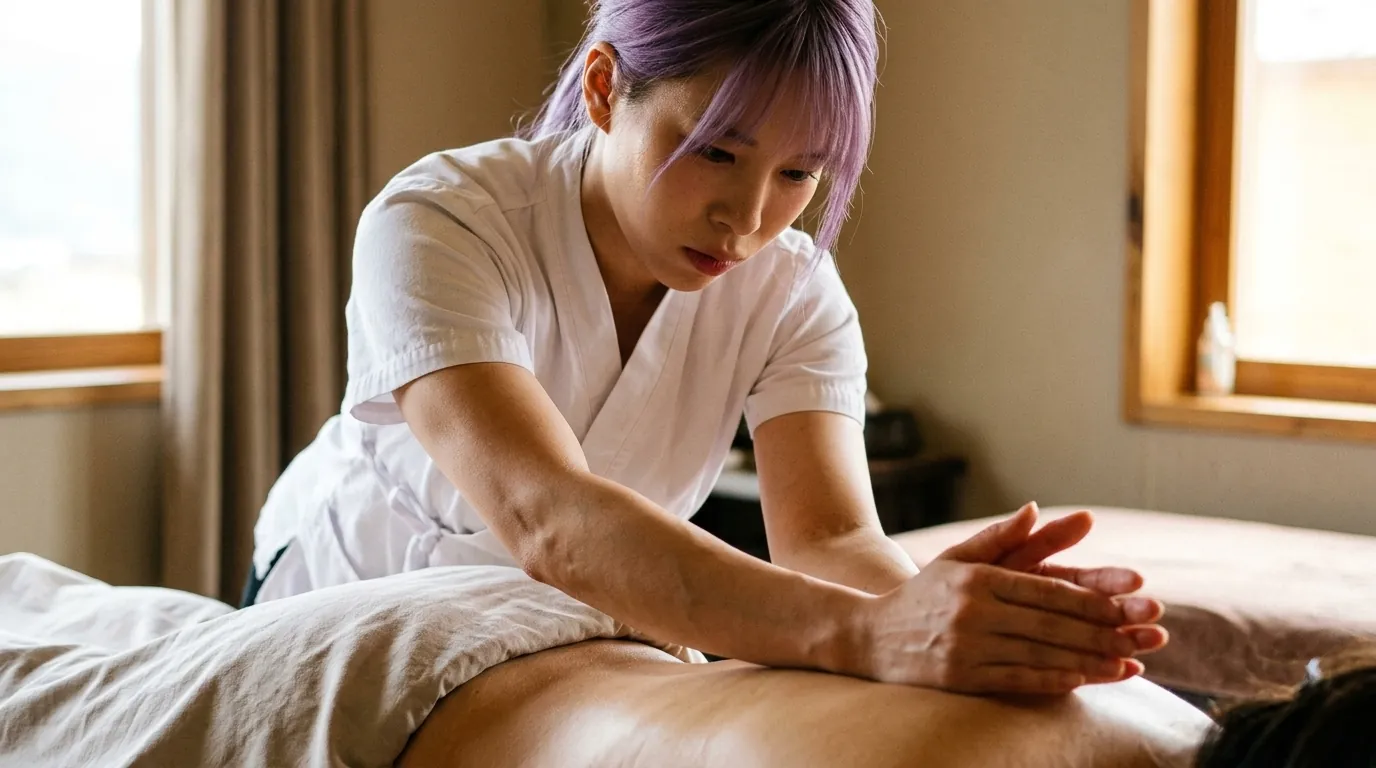
Oil is thin, spreads easily and keeps moving, which is exactly what a long stroke needs. When a practitioner sweeps a forearm from the base of your spine to your shoulder in one unbroken line, nothing along that line is allowed to catch. Oil makes the whole length feel like a single movement rather than a series of pulls.
This is why a Swedish massage is an oil treatment and could not really be anything else. The strokes it is built from are continuous by definition, and continuity is the thing you remember afterwards. The same applies to the oil half of a Thai combination massage, where the smoothing work over an area that has just been stretched depends on the hands travelling freely.
Massage balm: for hands that need to stay
Balm is the same idea at a different consistency. Denser, slower to absorb, with a faint tack to it. Where oil lets the hand go, balm lets the hand arrive somewhere and stay put while the weight comes on gradually. Most table sessions use both: oil to cover ground, balm for the few places that need holding.
That is the shape of a deep tissue massage. An elbow or a thumb settles into one area, the pace drops right down, and nothing moves for a while. On a well-oiled surface that contact would slide off the moment it loaded, and the practitioner would have to press harder to compensate, which is the wrong direction. More grip means less force is needed, which is worth knowing if you assume firm work has to be effortful to count. More on that trade in the pressure guide.
Why can some massage be done with nothing at all?
A dry clothed session is not an oil session with the oil left out. It is a different set of techniques, and the absence of a medium is what makes them possible.
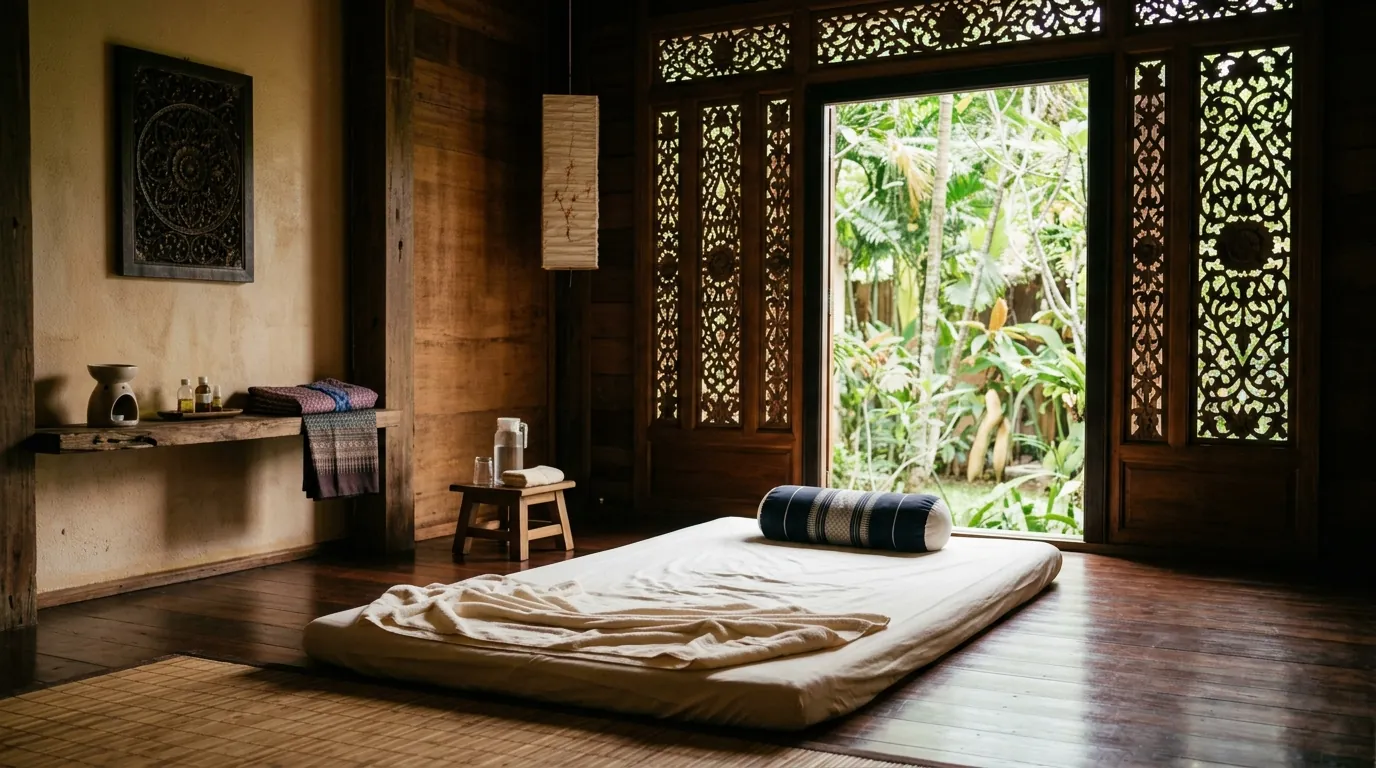
Assisted stretching needs the practitioner to take hold of a limb and keep hold of it while your weight moves. Oiled skin makes that unsafe, because a grip that can slip is a grip nobody should be relying on. Fabric gives a secure hold, and it lets a forearm brace against your back or a shin rest against your leg. None of that survives contact with oil. It is the practical reason traditional Thai work is done fully clothed, and part of why it happens at floor level, which the mat and table comparison covers.
A combination treatment lives across that line. The clothed stretching and the oil work cannot happen in the same moment, so the session runs in halves and is handled with draping. What that means for undressing belongs to the piece on what to wear.
| Medium | What the hands can do | What it suits |
|---|---|---|
| Oil | Travel in long unbroken strokes without catching the skin | Full-body flowing work, warming an area, covering ground |
| Balm | Settle in one place and load slowly without sliding off | Slow sustained attention in a small number of areas |
| Neither | Hold a limb securely, brace, lean and use body weight as leverage | Assisted stretching, pressure through clothing, work at floor level |
What about the scent?
Scent is the part people have the strongest opinions about and mention the least.
Say something if you are going on to an office or a dinner and would rather not arrive smelling of the room, or if strong fragrance gives you a headache. If you are pregnant, speak to your doctor about scented products as well as about the massage. Preferring plain needs no reason at all.
Where does the oil end up, and do you shower after?
Most of it absorbs during the session. What is left is a light film that fades over the next hour or two, plus whatever transfers to your clothes, which is usually less than people expect and lives mainly at the collar and across the shoulders.
Hair is the real question, and it depends on how much neck and scalp work is involved. If long hair matters to you today, tie it up before you get on the table and say you would rather the oil stayed below the hairline. Nobody will find that unusual. The rest of the hour that follows a session is covered in before and after your massage.
- Shower before, not afterClean dry skin takes the oil better and warms faster under the first strokes. A hot shower straight afterwards mostly washes off the warmth you have just spent an hour acquiring.
- Dress for itSomething soft, dark and forgiving. Oil comes out of ordinary fabric in a normal wash and is far less agreeable to silk or fine wool.
- Ask for a towel downIf you have somewhere to be, say so at the start. A practitioner can finish by taking the excess off with a warm towel rather than leaving it on the skin.
Can you ask for a different medium?
Within reason, yes, and the request is more ordinary than it sounds. Unscented instead of scented, less oil rather than more, balm on the shoulders and nothing anywhere else, no oil above the collarbone. All of those are small adjustments to how a session runs rather than requests for a different treatment.
What cannot be swapped is the medium a technique depends on. Asking for a fully dry Swedish massage removes the strokes it is made of, and asking for oiled assisted stretching removes the grip those stretches rely on. If the medium is the thing you feel strongly about, choose the treatment by that rather than trying to convert one into another after you are on the table.
What goes on the skin is not a finishing touch. It decides what the hands are allowed to do for the next hour.
Choosing with the medium in mind
If you want an hour of continuous warmth and long strokes, you want oil, and the treatment follows from there. If you want slow concentrated attention in two or three places, you want grip. If the appeal is being moved and stretched rather than worked over, you want a session where nothing is applied to you at all. Each of the five treatments on the menu sits somewhere on that scale, and reading them with this question in mind tends to narrow the choice quickly.
Common questions
Do you need oil for a massage?
Not for every kind. Oil is needed wherever the hands have to travel across skin without dragging, which covers most table work. Pressure held in one spot, work done through clothing and assisted stretching all function perfectly well dry. It depends entirely on what the session is built from.
What is the difference between massage oil and massage balm?
Thickness and how long they stay put. Oil spreads thin and keeps moving, which suits long continuous strokes. Balm is denser, absorbs more slowly and has a slight tack to it, so a forearm can settle somewhere and stay without sliding off. Many sessions use both, oil to open an area and balm for the parts that need to sit still.
Can I ask for unscented massage oil?
Yes, and it is a common request rather than a fussy one. Say so when you arrive, before anything is poured. Scent is worth mentioning if you are sensitive to it, if you are going straight on to see other people, or simply if you would rather not carry the smell of the room home with you.
Should I shower before or after a massage?
Before is the more useful of the two. Clean, dry skin takes oil evenly, and skin that is already warm settles faster under the first strokes. Afterwards there is no rule, though a fair number of people would rather not wash the oil straight off. If you are going somewhere directly, ask for the excess to be taken off with a warm towel at the end instead.
I have sensitive skin. What should I say?
Mention it when you book and again when you arrive, and name the thing you react to if you know it, such as nut oils or added fragrance. A practitioner can change what is used or work through a towel instead. Anyone who is pregnant, recovering from an injury or managing a medical condition should speak to their doctor first, and tell the practitioner before the session begins. A practitioner offers comfort and touch rather than medical advice.